
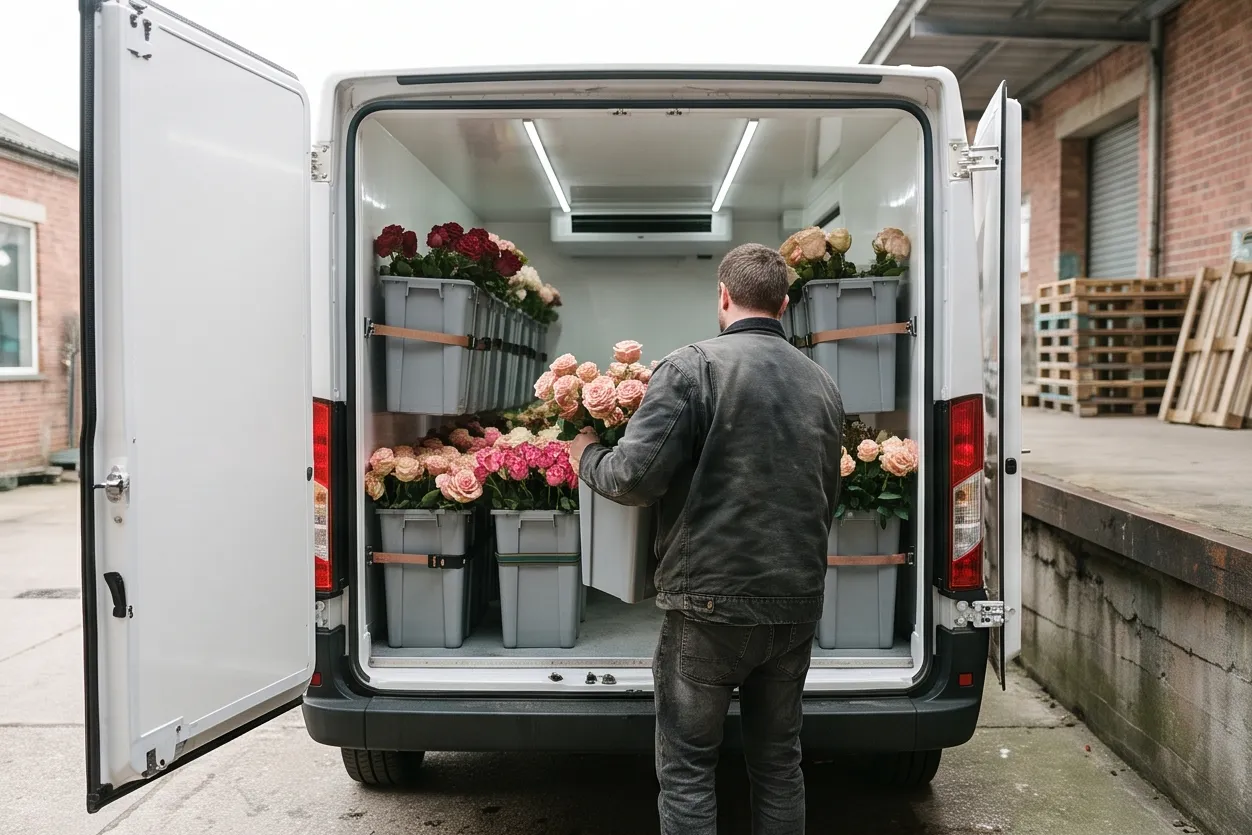
Transporting cut flowers decides half the fate of a delivery before the boxes ever reach your cold room: stems that spent half a day in a warm van lose several days of life, and no amount of recutting or flower food brings them back. The rule is the same for a wholesaler and a shop: an unbroken cold chain from farm to cold room, dry packing for long routes, water for short ones, and a thermometer in your hand when the delivery arrives.
In short
- Most cut flowers travel and are stored at +2 to +8 °C, roses and chrysanthemums towards the lower end; tropical flowers travel separately, no colder than +12 to +15 °C.
- The riskiest moment is the handover, not the road: a van standing with its doors open, boxes waiting on the pavement or in a warm corridor.
- Dry transport in boxes suits long routes, wet transport in buckets suits city deliveries and flowers that dislike drying out.
- Check the delivery while the driver is still there: temperature inside the box, heads, leaves, stem count. Photograph and report damage the same day.
Why transporting cut flowers decides their vase life
A cut flower keeps breathing and using up the sugars it stored on the plant. In warmth that respiration speeds up several times over, and the flower ages faster. Every hour a delivery spends at +20 °C takes time away from your display and from the customer's vase. At the moment of delivery such a rose may look perfect: the difference shows two or three days later, when heads open and drop earlier than their neighbours.
The second problem is temperature swings. A box that comes out of the cold into a warm, humid room gathers condensation inside, and wet petals in a closed box are ideal for grey mould (botrytis). The third is ethylene, a gas given off by fruit, wilting flowers and engine exhaust. Carnations, alstroemeria, gypsophila, lilies and delphinium are especially sensitive: buds drop or fail to open.
The conclusion is simple. The cold chain must not break even briefly, and carrying flowers next to fruit or leaving boxes beside a running engine lowers their value. Transport losses later show up in your figures as ordinary waste and are easily blamed on the shop staff. How to tell the two apart is covered in our article on flower waste.
Temperature for transporting cut flowers
The general guide for cut flowers is +2 to +8 °C, the same as for storage. Within that range crops behave differently, and a refrigerated truck carrying a mixed load is set for the majority.
| Crop | Transport temperature, rough guide | What matters |
|---|---|---|
| Roses, chrysanthemums, carnations, alstroemeria | +2 to +5 °C | The closer to the lower end, the longer they last afterwards |
| Tulips, narcissi, irises | +2 to +5 °C | Tulips travel upright: stems bend towards light |
| Gerbera, hydrangea, sunflowers | +4 to +8 °C | Gerbera in trays with support for each head, hydrangea best in water |
| Lilies | +2 to +5 °C | Sensitive to ethylene, buds should be closed |
| Anthurium, orchids, heliconia, ginger | no colder than +12 to +15 °C | At normal cut flower temperatures they get chilling injury: dark patches a day or two later |
Tropical flowers travel separately or in an insulated box, not in a shared load at +4 °C. Their cold damage is invisible at delivery and appears only on the shop floor, so proving it to a supplier is close to impossible.
In winter the danger is frost rather than heat. A few minutes outside at −10 °C is enough to make petals glassy and then dark. Carry boxes straight from the van into the building, and do not leave them by the door while the driver sorts out the paperwork.
Dry and wet transport: which to choose
When transporting cut flowers, the method depends on distance, crop and who is driving.
| Method | How it works | Where it fits | Weak points |
|---|---|---|---|
| Dry | Stems without water in long cardboard boxes, bunches separated by paper | Imports and long-distance deliveries in a refrigerated truck | Stems need recutting and several hours in water after delivery, or they take long to recover |
| Wet | Buckets with a little water on Danish trolleys or racks | Wholesaler to shop, hydrangea, gerbera, seasonal flowers | Heavy, water splashes when braking, buckets must be cleaned and returned |
| Mixed | Long route dry, last leg in water | Wholesalers who process imports before delivering to shops | One more handover, one more place where the cold chain can break |
Roses from Ecuador and Kenya arrive dry: packed tightly, they can travel for several days. Dutch deliveries often come in buckets on trolleys and can go straight into the cold room. How import routes and transit times work is covered in our article on flowers from Holland, Ecuador and Kenya.
For a shop that collects from a cash-and-carry in its own van, water on a short trip helps but is not essential. What matters more is that the van does not heat up. In summer an air-conditioned van that never waits in the sun protects more stems than buckets of water in a hot load space.
Packaging: boxes, buckets, paper and sleeves
Boxes. A long corrugated box is the standard for dry transport. Inside, bunches are held by cross straps or tape so the heads do not rub, and petals are protected by a corrugated sleeve or paper. A good box has ventilation holes, which let heat escape faster during pre-cooling. Plastic crates last longer but have to go back to the supplier and be washed.
Buckets and containers. Plastic buckets of different heights stand on a trolley or a rack in the van. Use only a few centimetres of water: enough to keep stems from drying, little enough not to splash. Wash buckets after every trip. Dirty water full of bacteria blocks the stems, and the flower stops drinking.
Paper. Kraft or heavy wrapping paper holds the shape of a bunch, absorbs excess moisture and stops petals from freezing to the box walls. Plastic film without holes traps condensation, so use it with care on long routes.
Customer packaging. For a customer or courier delivery, a bouquet goes into an aqua box or a water bag with a holder. In winter add a second layer of paper and film. A short walk to the car in frost without wrapping costs a bouquet several days.
Transporting potted plants
Pot plants fear shaking and cold more than warmth. Small pots travel in boxes with cell inserts so each plant stands on its own and does not tip over on corners. Larger plants are wedged in crates with paper or cardboard.
In winter most house plants are damaged by even a short exposure to cold, and tropical ones such as potted orchids or anthurium suffer even around zero. Wrap them in heavy paper or closed-top sleeves and carry them in a heated vehicle. Do not water heavily before the trip: a wet root ball is heavier and cools down faster.
In summer the risk flips. A closed van in the sun heats up within minutes, and plants in plastic sleeves start to sweat and drop leaves. Load last, unload first, open the sleeves on arrival and give the plants light within a few hours. Within the EU, pot plants for planting moving between businesses need a plant passport, which your supplier provides.
Checking a delivery in ten minutes
Checking the delivery is your last chance to return damaged goods. Open boxes while the driver is there, not after the van has left, and go through them in order.
- Temperature. A probe thermometer between the bunches in several boxes. If it reads +12 °C on a delivery sold as cold chain, the load stood somewhere warm, and that is a conversation with your supplier.
- Rose heads. Soft heads, grey spots and fluffy growth on the outer petals mean botrytis. It spreads to neighbouring bunches, so remove affected stems at once.
- Wilting. A drooping neck on a rose often means the stem went without water for too long. Recut, put the bunch in water in the cold and check again after a few hours: if the necks have not lifted, it is damage.
- Frost damage. Watery, glassy, then darkening patches on petals and leaves. They do not recover.
- Leaves and stems. Yellow leaves on alstroemeria and chrysanthemums point to a long trip in the dark or contact with ethylene. Count broken stems.
- Quantity and length. Count stems in a few bunches at random and check lengths against the delivery note.
Photograph damage with the delivery note in the frame and record it on the note, or on the CMR consignment note for international road freight, with the driver's signature. Agree the claims procedure with your supplier in advance, ideally when you choose them: how to record damage, how quickly to report it, what they replace and what they credit. The questions worth asking before the first order are listed in our article on flower suppliers.
Handling damaged stock and counting transport losses
After checking, split the delivery into three groups: good, good after recutting and rest in water, and damaged for return. Condition the good stems at once: recut and into the cold. How to do this and how long to leave them in water is covered in storing cut flowers.
Damaged stems that the supplier will not take back become waste, but record them under their own reason, "delivery damage" rather than "wilted". Say you buy around €2,000 of flowers twice a week, and about €60 from each delivery goes in the bin because of the road. Over a month that is close to €500, and inside the overall waste figure you would never see it. A separate line shows which supplier or route is costing you money.
If you record purchases in a CRM for flower wholesalers such as Petala, every delivery has its supplier, invoice, delivery day and sum, you see what is still in transit and what has been received, and write-offs are recorded separately. Comparing the damage from two suppliers over a quarter is then much faster than going through paper delivery notes.
From wholesaler to customer
For a wholesaler, the second half of the chain is delivery to shops. Losses here happen mostly at peak times, when orders are picked early and wait in a warm dispatch area. Pick in the cold, hand over close to the van's arrival, and keep at least a buffer zone at the loading door so you neither warm the stock nor drain the cold room. A shop delivering bouquets to its own customers faces the same issue on a smaller scale: transporting cut flowers in a hot car between appointments costs vase life, so plan routes so that bouquets spend as little time in the vehicle as possible.
The more precisely buyers know what arrives and when, the fewer "just in case" orders sit around unused. On a Petala website, goods in transit show their arrival date and can be reserved, and the cart splits an order into items from stock and items from an incoming shipment, each with its own date. You can see how it looks for a trade customer on the demo website.
Frequently asked questions
What temperature should cut flowers be transported at?
Usually +2 to +8 °C, with roses and chrysanthemums closer to +2 to +5 °C. Tropical flowers such as anthurium, orchids and heliconia need at least +12 to +15 °C, or they get chilling injury. Above all, avoid swings during loading and unloading.
Is dry or wet transport better for cut flowers?
Dry transport in boxes without water suits long routes and imports. Wet transport in buckets suits short routes and flowers that dislike drying out, such as hydrangea and gerbera. Many wholesalers use both: the long leg dry, the last leg in water.
What box should I use for transporting flowers?
For cut flowers, a long corrugated box with ventilation holes, straps to hold the bunches and paper or a sleeve to protect the heads. For pot plants, a box with cell inserts so pots cannot fall over.
How do I transport potted plants in winter?
Wrap them in heavy paper or a closed-top sleeve and carry them in a heated vehicle, never leaving them in a cold van. Tropical plants are damaged even by a short spell around zero.
What should I do if a flower delivery arrives with botrytis?
Set the affected bunches aside while the driver is there, photograph them with the delivery note, record the damage on the note and tell the supplier the same day. Check the healthy stems from the same box and condition them separately.
 Storage & stockStoring cut flowers: how to make stems last longer in your shop
 PurchasingFlower Suppliers: How to Choose and Vet Them for Your Shop
 Storage & stockFlower waste: normal levels, causes and how to reduce it